
A large sliding door connecting your living room to the lawn should open smoothly and keep rainwater outside. But what happens when the door starts dragging on its track? Or when it becomes difficult to lock, or lets water in during the monsoon? For homeowners planning large sliding doors in Ludhiana, these problems can lead to unexpected repair costs and repeated maintenance. The real issue is often not the aluminium itself. It is whether the fabricator engineered the rollers, track, drainage and door system for the opening's size and weight.
Why Large Sliding Doors in Ludhiana Start Sagging or Leaking
Ludhiana's villa and independent house market has grown fast. With that growth has come a stronger appetite for wide openings that connect living spaces to lawns, courtyards and terraces. Most buyers shopping for large sliding doors compare quotes on profile thickness, glass tint and price per square foot. That's a reasonable starting point. But it overlooks the engineering behind the panel. That engineering determines whether a large sliding panel operates smoothly under its actual glass weight, opening dimensions and daily usage. A door that size isn't really one product. It's an assembly of track, rollers, interlocks, gaskets and glass. The fabricator must size each part correctly for that specific opening.
Aluminium Doesn't Automatically Mean a Good Sliding Door
There's a common assumption that because aluminium is strong, any aluminium sliding door will handle a large opening well. That isn't quite right. Aluminium gives you a light, corrosion resistant frame. But a wide sliding panel carrying heavy glass puts real stress on the rollers, the track and the locking points. That stress does not fall on the aluminium alone. A profile can be dimensionally identical from two different fabricators. Yet it can perform completely differently. The difference comes down to roller load rating, track chamber design and how precisely the fabricator built and installed it. Choosing aluminium is a material decision. Choosing a door that won't sag is a system decision.
What Actually Makes a Large Sliding Door Perform
Track, Rollers and Panel Weight
Every large sliding panel has a weight limit that its rollers and track must carry. A fabricator may pair a large double-glazed panel with rollers or tracks that cannot carry its actual weight. When that happens, the hardware may experience excessive wear, misalignment and increased rolling resistance. Over time, this can make the sliding door difficult to operate and may require hardware adjustment or replacement. This is less about the aluminium. It is more about whether the fabricator specified the hardware for that exact span and glass weight.
Wind Load on Large Glass Panels
Builders often place Ludhiana villas on open plots with fewer surrounding structures than dense city blocks. That means large glass panels can face more direct wind pressure than people expect. Architects and façade professionals use wind load calculations to understand the design wind pressure for a project. These results help guide the selection of suitable aluminium sliding door systems, glass specifications, panel dimensions and structural requirements.
This is standard practice for specifying architectural glazing for wind resistance in large projects, not something reserved for premium buildings. Without evaluating wind pressure, a fabricator may specify a sliding door without enough consideration of frame deflection or glass strength. That gap affects the performance of the complete assembly.
Drainage and Water Management
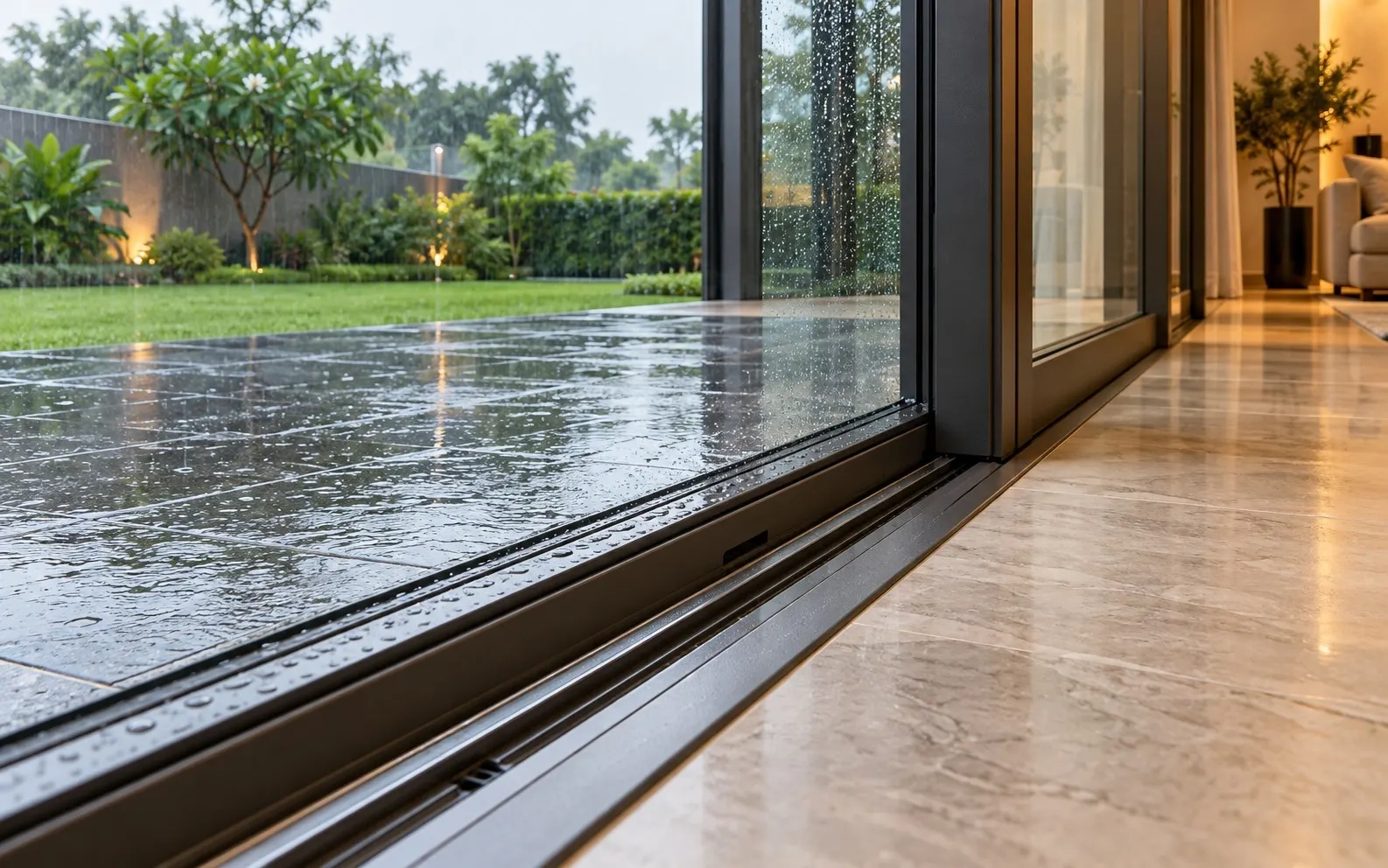
Ludhiana's monsoon arrives in short, intense bursts rather than steady rain. That means a sliding door's track needs to shed water fast. A properly designed sliding door system uses drainage channels, outlet openings and sealing arrangements to manage water in the track. However, blocked drainage paths, poor installation or unsuitable threshold design can allow water to accumulate. That raises the risk of leakage during heavy rain.
Hardware and Multi-Point Locking
A single lock point may work fine on a small window. It may not provide the security or engagement a large sliding door requires. Depending on the sliding door configuration, compatible locking hardware and multiple locking points can improve security. They also help maintain proper engagement between the moving panel and frame. Fabricators must still evaluate wind resistance through the complete system design, including profiles, interlocks, glass and fixings.
This is one reason independent window and door performance testing matters. It helps assess how the complete system behaves under defined conditions, not just its appearance or individual components.
What Happens When the System Isn't Engineered Properly
The consequences aren't always dramatic on day one. They may show up gradually through a door that becomes difficult to slide. Or they may appear as water marks on the floor after heavy rain. Dust can also collect along the track, or a lock may stop engaging correctly. These issues are not necessarily problems with aluminium as a material. They can result from hardware, drainage or fabrication issues. Or they can come from installation that the fabricator did not properly match to the opening's size and requirements.
Depending on the cause, repairs may involve roller adjustment, drainage cleaning, hardware replacement or correction of installation issues. More serious design or system compatibility problems can require extensive rework, increasing maintenance costs and inconvenience for homeowners.
How Winda Systems Approaches Large Sliding Doors
Winda Systems approaches large aluminium sliding doors through complete system engineering rather than profile selection alone. Winda's core is Italian design and engineered performance. It focuses on the compatibility of aluminium profiles, hardware, drainage, glass and fabrication requirements. This helps fabricators, architects and builders evaluate sliding door systems according to the actual demands of each project.
For large openings in Ludhiana and across Punjab, several factors matter: wind pressure, panel dimensions, glass weight and installation conditions. Together, they guide the choice of a suitable system. Winda also provides a Wind Load Calculator to help professionals estimate project specific wind pressure before finalising window and door specifications.
Conclusion
A large sliding door is one of the more visible decisions you will make in a Ludhiana home. It deserves more scrutiny than a quote comparing price per square foot. Look past the glass and ask about the track, the rollers, the drainage and the locking system. These components play an important role in how the door operates over time.
If you're planning a large opening for your home, explore which Winda system fits your project. Do this before you finalise a fabricator. Understanding the system requirements early can help reduce avoidable installation problems, maintenance expenses and uncertainty during project execution.
Planning Large Sliding Doors for Your Home?
You might be planning aluminium sliding doors for a villa, farmhouse or residential project in Ludhiana or Punjab. If so, connect with Winda Systems. We'll help you understand the system requirements for your opening. Review panel dimensions, glass specifications, hardware and wind load considerations before finalising your selection.
Frequently Asked Questions
Q: What is the maximum size for a large sliding door in a Ludhiana home?
A: It depends on the system, not just the opening. With the right track, rollers and interlocks, engineered systems can comfortably span 10 to 12 feet or more per panel. Without that engineering, even a smaller door can underperform.
Q: Do large sliding doors leak during Ludhiana's monsoon?
A: They can, if the track lacks proper drainage design. A well-engineered multi-chamber track with weep holes sheds sudden heavy rain well. A shallow or clogged track is the usual cause of water pooling at the threshold.
Q: Is aluminium better than wood or UPVC for large sliding doors?
A: Builders generally prefer aluminium for large spans because it is lighter and more dimensionally stable under heavy glass. But the material alone doesn't guarantee performance. The complete system, including hardware and fabrication, decides that.
Q: How much do large sliding doors cost in Ludhiana?
A: Cost varies with panel size, glass specification, hardware and the fabricator. It is worth comparing systems on what's included, such as drainage design, hardware quality and warranty. That matters more than price per square foot alone.
Q: How long should an aluminium sliding door system last?
A: A properly engineered system, correctly fabricated and installed, delivers long-term, low-maintenance use. Performance over time depends on matching hardware and drainage design to the opening size from the start.